Lights, Camera, Impact: The role of screen production in shaping New Zealand’s economy and culture
The New Zealand Film Commission, NZ On Air and Te Māngai Pāho commissioned NZIER and Verian to analyse the role of screen production in shaping New Zealand’s economy and culture. This work forms part of Mahi Tahi, an initiative by the three agencies to strengthen and grow the screen sector in Aotearoa through shared insight and collaboration.
The research covered three areas: economic activity in New Zealand screen production, the cultural impact on NZ screen production, and how our screen content influences global perceptions of New Zealand.
Key findings
Economic impact:
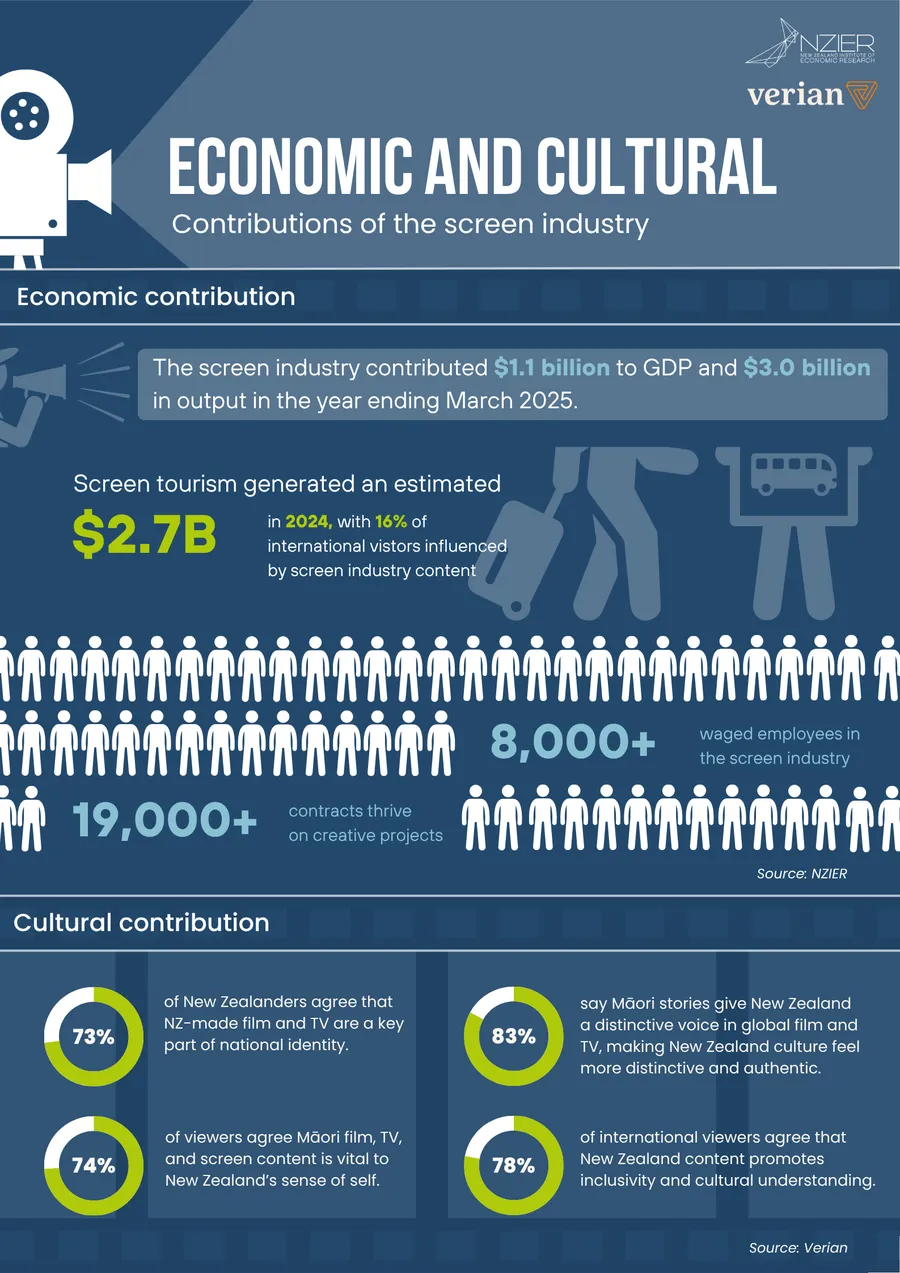
- $3 billion total output from the screen sector.
- 26,960 overall screen industry workforce (both employees and contractors)
- NZSPR data shows that qualifying NZ production expenditure for international productions in 2024/25 was $647.1M.
- $2.7 billion estimated tourism expenditure linked to screen content.
- 15.9% of visitors quote screen influences in their decision to visit NZ.
Cultural impact:
- Nearly 8 in 10 international viewers say NZ content sparks curiosity and 72% considered visiting as a result.
- 73% of New Zealanders agree NZ-made content shapes national identity.
- 87% of international viewers say Māori stories help them value indigenous storytelling more broadly.
- 83% of international viewers agree NZ content gives New Zealand a distinctive voice in global film and television.
The key findings of this research highlight three critical outcomes for the future of the screen industry.
Cultural value as our superpower - the research demonstrated that locally made content not only contributes to national identity and belonging but also positions New Zealand as a leader in indigenous national storytelling and cultural authenticity on a global stage.
Dependence on incentives and the need for sustainability - the report reveals that the screen sector remains heavily reliant on incentives to attract and retain productions.
Persistent data gaps - the research process has underscored significant data gaps in the screen industry.
These outcomes provide a clear roadmap for action, guiding investment in better data, fostering collaboration to build a more sustainable industry, and championing the unique cultural strengths that set New Zealand’s screen industry apart.