Games Quarterly - September 2026

A fresh mix of studio spotlights, sector updates and stories from across Aotearoa's growing games industry.

Games Quarterly

Kia ora koutou kātoa,

Welcome to the latest edition of Games Quarterly. This issue features a fresh mix of studio spotlights, sector updates and stories from across Aotearoa's growing games industry.

As always, we'd love to hear your ideas. If there's a topic you'd like us to cover or a studio success worth celebrating, send us a note at gamesrebate@nzonair.govt.nz.

What’s New in the GDSR

It’s been a busy few months for the GDSR, with the 2026 rebate round complete. This year, $21.9 million was distributed to 43 eligible game development studios across Aotearoa — up from 40 studios last year. Recipient studios reported a combined annual revenue of $829 million, a 17% increase on the previous year, while the number of eligible games in development grew from 170 to 194.

The latest results reinforce the strength of New Zealand's game development sector at a time when many parts of the global industry continue to face challenges. Almost all revenue generated by recipient studios came from exports, highlighting the sector's growing contribution to New Zealand's digital economy.

The announcement attracted strong media coverage both here and internationally, helping raise the profile of New Zealand game development on the world stage. One of those news sites, GamesIndustry.biz, highlighted the strength of studios across New Zealand’s games sector and the fact that small and medium-sized studios made up 90% of the 2026 GDSR recipients.

Check out some of the coverage here:

  • Gamesindustry.biz – “New Zealand’s success is being built by ambitious studios of all sizes”

https://www.gamesindustry.biz/new-zealands-success-is-being-built-by-ambitious-studios-of-all-sizes-combined-revenue-of-studios-supported-by-rebate-grows-17-to-829m

  • RNZ – “NZ On Air gives nearly $22m in taxpayer rebates to game development studios”

https://www.rnz.co.nz/news/business/685113/nz-on-air-gives-nearly-22m-in-taxpayer-rebates-to-game-development-studios

  • NewstalkZB – “’Rapid revenue growth’: Kiwi video game studios raking in more and more money”

https://www.newstalkzb.co.nz/on-air/mike-hosking-breakfast/audio/chantelle-cole-nz-on-airs-director-of-game-development-sector-rebate-on-studio-revenue-increasing-17-in-the-year-to-july/

  • Pocketgamer.biz – “New Zealand game studios grow revenue 17% to $829m with rebate support”

https://www.pocketgamer.biz/new-zealand-game-studios-grow-revenue-17-to-829m-with-rebate-support/

Gamescom and NZGDC

Gamescom has just finished, and two of our NZ On Air team headed to Cologne, Germany, to attend the world's largest games industry event. They joined thousands of developers, publishers and industry leaders from around the globe, meeting with platform holders, government agencies and game industry organisations.

It was a valuable opportunity to champion New Zealand's game development sector on the international stage, strengthen relationships, and explore new opportunities that could help Kiwi studios grow and compete globally. Just as importantly, it was also a chance to share the story of a sector that continues to thrive and innovate despite the challenging global environment. We look forward to sharing our fresh insights, new connections and opportunities with the Aotearoa games community.

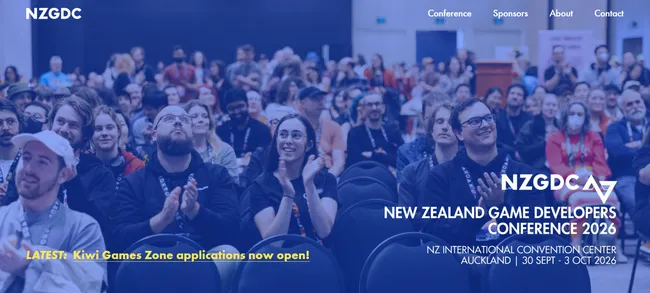
Closer to home, we're looking ahead to the New Zealand Game Developers Conference (NZGDC) next week. The NZ On Air team will be there chairing a special panel at 10:15am on Saturday 3 October with a handful of GDSR studio recipients, sharing how the scheme has supported their businesses to grow, innovate and succeed. This will be followed by an opportunity to answer questions about the GDSR at a special NZ On Air: Ask Us Anything session at 11:15am.

To find out more about NZGDC and to see the programme, go here.

----------------------------------------------------------------------------------------------------

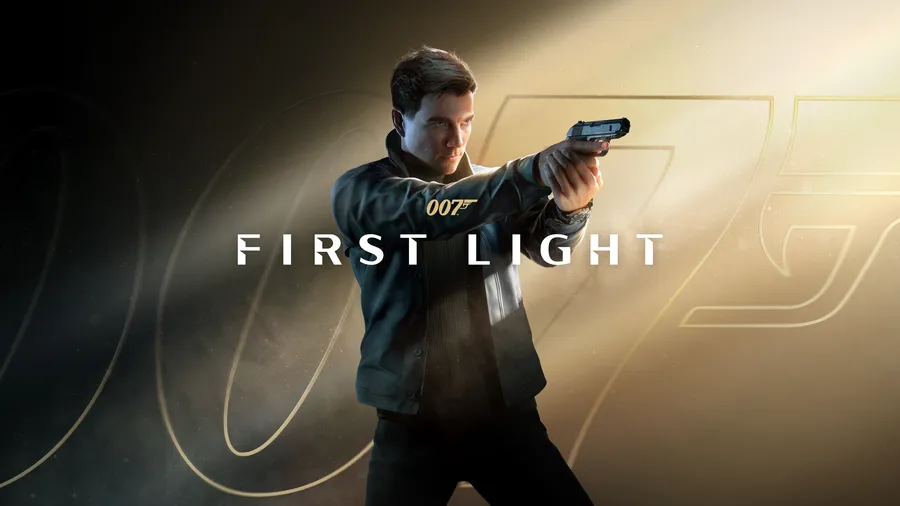
007FirstLight

NZ Studio Spotlight

  • Pōneke Wellington-based studio Floating Rock brought its animation expertise to one of the world’s most iconic entertainment franchises, contributing to the in-game cinematics for 007 First Light. Developed and published by IO Interactive, the game introduces an original James Bond origin story following a young Bond on his journey towards becoming a '00' agent. Floating Rock’s contribution builds on the studio’s growing portfolio of international work and showcases the world-class creative talent contributing to major global titles from New Zealand. Check out Floating Rock’s work ​here​.
  • It’s been a busy year for Ōtepoti Dunedin-based Deep Field Games and its breakout survival-crafting title Abiotic Factor. The team recently celebrated the first anniversary of the game’s full release with a substantial community update, adding new devices, gear, pets, perks and plenty of fresh ways for players to experiment within the GATE Cascade Research Facility. Deep Field is also looking ahead to the game’s next major chapter, Entropic Break, a new DLC coming in 2027 that takes players beyond the facility and into a tropical world of new islands, anomalies and environments. Read more ​here​.
  • Kiwi family-run indie studio Eat Pant Games has been attracting international attention for its debut title Teeto, with games news site VICE recently spotlighting the colourful 3D platformer as one of the year’s most wholesome co-op experiences. The article praises the game’s joyful, nostalgic feel, its local co-op play and the way it channels the spirit of classic platformers, calling it a “love letter” to the developers’ daughter. Created by partners Mitch and Ali, Teeto launched in July and marks an exciting first release for the small New Zealand studio. Read the VICE feature ​here​.

If your studio has news to share, we’d love to hear it — drop us a line.

----------------------------------------------------------------------------------------------------

Global Games Snapshot

A snapshot of global industry news, spanning the latest data and insights, behind-the-scenes features and stories showcasing the global impact of video games.

  • The global games market has officially passed another major milestone, generating US$201.6 billion in revenue in 2025, up 9.1% year-on-year. Newzoo’s latest analysis takes a deeper look at what’s driving that growth, with PC recording its strongest growth rate on record, mobile reaching US$113.3 billion and every global region reporting growth. Looking ahead, Newzoo expects the market to reach US$234.4 billion by 2028. Explore Newzoo’s global market analysis here.
  • The 2026 Games for Change Awards celebrated games and immersive experiences making a positive impact around the world, with entries spanning 42 countries. Compulsion Games’ South of Midnight was named Game of the Year, while Consume Me took home three awards, including Best Narrative, Best Gameplay and the Indie Breakout Award. See the 2026 winners here.
  • For a fascinating look at the craft behind AAA game development, The Coalition has shared an extensive deep dive into the making of Gears of War: E-Day. The team discusses rebuilding the series for Unreal Engine 5, from characters and environments to animation, sound and lighting – offering a glimpse into the extraordinary range of creative and technical disciplines that go into bringing a game like this to life. There’s a great Aotearoa connection too: fan-favourite Tai Kaliso is played by New Zealand bench-press record holder and arm-wrestling champion Maateiwarangi Heta-Morris. Go behind the scenes with The Coalition here.
  • Roblox is testing new approaches to game creation with Build, a mobile-first tool that allows users to turn text prompts into simple playable experiences directly within the Roblox app. The platform is also exploring AI-assisted tools for professional creators across areas such as playtesting, analytics and experimentation. New Zealand was selected as the first public alpha market for Build, giving local creators an early look at how Roblox is approaching this evolving area of game development. Take a look here.
  • Games for Change is bringing an evidence-led perspective to conversations about young people and video games. Its latest research brings together insights into young people’s gaming experiences, helping parents and caregivers better understand the role games can play in their lives and encouraging conversations. It’s another valuable contribution to exploring games as spaces for play, connection, creativity and learning. Read more about the research here.

----------------------------------------------------------------------------------------------------

Five Minutes With...

SamBatty_Headshot

Orbitals has a distinctive anime-inspired visual style. What was the vision behind this?

We wanted Orbitals to feel as if the characters you are playing are moving like characters from an anime you might watch on TV. To do that we brought qualities of anime from the 80's and traditional cel animation into the 3D animation style of Orbitals.

We relied less on the computer for inbetweening and focused our efforts on posing by hand as much as possible. We embraced imperfections as this gave us more dynamic motion and a more authentic look.

So much of modern game animation aims for realism, but Orbitals seems to embrace stylisation instead. What were the challenges in this?

The style of the animation is pushing away from realism as much as we can. We embrace the gaps in the animation in order to make something that fits the style that is both striking and satisfying.

Creatively this meant intentionally leaving information out of the animation assets we author for the characters. We work at a limited framerate and curate the appropriate amount of detail in the posing to achieve an animation which communicates clearly to the player.

Animation plays a huge role in making characters feel alive, especially in a co-op game. How do you use animation to give characters personality before they even speak?

The goal is that the player can tell the personality of our characters with just a pose. Maki and Omura are our two playable characters and they have very different personalities. Maki is confident and headstrong with a wide stance and Omura is laid back and carefree with his hand in his pocket.

To keep the characters distinct, we authored animation assets for every action, twice. This was critical to differentiate the two characters; however, it did mean a lot more animation assets since we didn't share anything between the two characters.

Shapefarm has a reputation for creating games with a really strong artistic identity. How important is having a visual style that's instantly recognisable?

To me, having a strong art style which can stand out in a screenshot and be instantly recognisable is really important for games. On the one hand it draws attention and on the other it gives the game a timeless appeal.

We have been pushing the art style of Orbitals in interesting ways, using techniques I had never considered before joining the project. For us in the animation team, we try to match that level of quality with some creative ideas of our own and solid animation to bring the world to life.

To read the full interview with Sam, you can find it here on our website.
Opportunities and Events

Making GDC week work harder for your studio

Every March, San Francisco becomes a meeting point for publishers, platform holders, investors, partners and game developers from around the world. For New Zealand studios, GDC Week is an opportunity to build relationships, gain market insight and create connections that can open doors internationally.

NZTE has a GDC Festival of Gaming Leveraging Programme designed to help the NZ games industry make the most of the event - through curated networking opportunities, dedicated professional meeting space, market intelligence and targeted connections.

Expressions of Interest for the programme are open until 1 December 2026. To find out more or register, go here. Also, if you are planning to go to GDC for the learning sessions, the Super Early GDC pass pricing is available until 9 October 2026.

NZTE’s Global Games Programme

NZTE also supports New Zealand game developers with international market insights, business connections, conference programmes and growth opportunities across key global markets.

To hear about upcoming opportunities at GDC, Gamescom, MIGW, XDS and other major international industry events, go here to join the NZTE Games Programme mailing list.

Events

  • Local events:  NZGDC (30 Sept–3 Oct) in Auckland
  • International Games Week/PAX Aus: (2-11 Oct) in Melbourne
  • Brasil Game Show: (9-11 Oct) in São Paulo
NZGDC

Ngā mihi nui

NZ On Air is committed to supporting sustainable, globally competitive game development across Aotearoa. If you have questions about the GDSR, want to share studio wins or have any other information to include in our Games Quarterly, just get in touch. We’d love to hear from you.

Stay in the loop: Share | Send us your wins

Contact: gamesrebate@nzonair.govt.nz

More info: NZ On Air

GDSR logo

Subscribe

Sign up to receive communications such as media releases, newsletters and funding decisions.